
Insights from IPREX EMEA Partners across Ireland, Germany, Sweden, Italy, Greece and Poland
A Year of Challenge and Transformation
2025 proved to be a pivotal year for the public relations industry across EMEA. Partners from Ireland to Poland report a shared experience: challenging market conditions met with technological transformation and a fundamental shift in what clients expect from their communications partners.
The unpredictable geopolitical landscape dominated the year, creating trade tensions and economic volatility that made businesses deeply uncomfortable. Ann-Marie O'Sullivan in Ireland noted that "Business dislikes uncertainty!" whilst Walsh PR's Maeve Governey reported Trump's policies particularly affecting pharma and food industries.
Yet within this challenging context, the PR industry demonstrated remarkable adaptability. TDUB Communications in Germany tracked "a really good number" of requests, though a concerning new phenomenon emerged: many pitches resulted in no agency being appointed at all. The issue wasn't that PR wasn't needed, but rather a lack of commitment or budget at C-level, with companies adopting a "let's wait and see" approach.
Spotlight in Sweden faced particularly acute pressures, with many lay-offs and bankruptcies in the industry. Aurai Consulting in Italy described the year as one of "Pragmatic Stabilization"—moving beyond AI hype toward integration and governance.
The AI Paradox: Promise and Peril
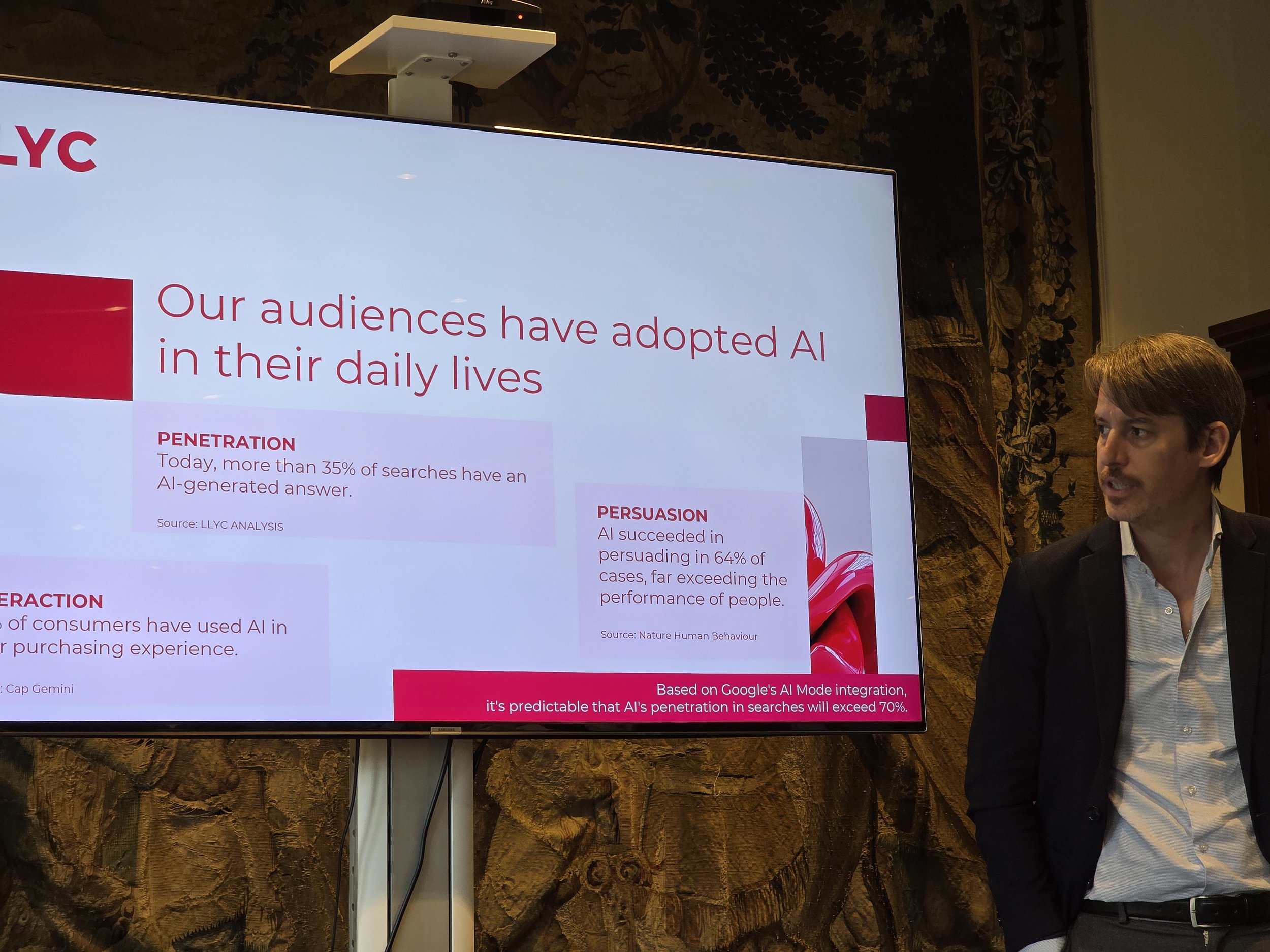
Artificial intelligence dominated conversations throughout 2025, but not in the way predicted. Rather than simple adoption, the industry grappled with AI's dual nature.
Reliant Communications in Greece reported that 61% of citizens use ChatGPT or other AI tools, with women and those aged 18-44 leading adoption. This mainstream integration signalled that AI has moved from specialist tool to everyday utility.
However, the rise of AI-generated misinformation became a critical challenge. More Communications in Poland observed that "the widespread availability of generative AI led to an increase in synthetic content and algorithm-generated misinformation online," forcing PR professionals to intensify verification processes in real time and incorporate new technological competencies into crisis communication.
The consensus across EMEA: AI must enhance human strategy and creativity rather than replace it. As Ann-Marie O'Sullivan in Ireland emphasised, "In a world saturated with AI-generated content, human expertise, domain knowledge and moral clarity become powerful differentiators."
The Budget Squeeze and Changing Client Demands
Financial pressures defined 2025 across the region. Ann-Marie O'Sullivan noted that Irish budgets came under pressure, with many agency professionals anticipating cuts continuing into 2026. Walsh PR reported "stop-start" contracts, campaigns being paused, and reductions in below-the-line budgets from clients.
Simultaneously, clients demanded more strategic value. Ireland saw a definite increase in provision of strategic counsel and scenario planning. More Communications in Poland observed an even stronger client-side emphasis on clearly linking communication activities to business outcomes, with the relationship between PR and SEO growing closer, especially regarding AI-powered search engines and Generative Engine Optimization (GEO).
Aurai Consulting in Italy noted that budgets are expected to remain flat but reallocated—less spend on traditional advertising, more on strategic consultancy and crisis preparedness. The emphasis shifted from generating visibility to managing complex reputational risks tied to geopolitical instability and economic compliance.
Regulatory and Transparency Imperatives
The year saw major regulatory developments reshaping PR practice. Aurai Consulting reported that the full enactment of the CSRD (Corporate Sustainability Reporting Directive) across Europe was the single most critical event for financial PR, forcing convergence between legal, financial and communication departments.
Marco Micheli from Aurai Consulting identified the dominant trend as "radical transparency", driven by full implementation of the EU's Green Claims Directive and stricter ESG enforcement: "Companies can no longer hide behind vague statements."
In Ireland, Ann-Marie O'Sullivan highlighted that government formation and launch of key policies in early 2025 set the tone, whilst the updated National Digital Strategy 2025 signalled renewed commitment to position Ireland as a global digital leader and AI hub. The proliferation of AI-powered cyberattacks and deepfakes became a constant, high-priority crisis communications issue.
The Talent Challenge
Across EMEA, finding and retaining talent emerged as a critical pressure point. Reliant Communications in Greece highlighted that it's "hard to find young talent, and it's tough to keep them once you do." Ann-Marie O'Sullivan noted that whilst Irish unemployment sits at just 4.9%, a skills gap persists, especially for roles requiring a blend of communications and advanced digital/data capabilities.
Walsh PR reported pressure competing with multinationals who can pay more, whilst junior-level salary expectations have increased substantially. Aurai Consulting observed that demand is shifting toward hybrid profiles—professionals who understand AI capabilities and can combine them with strategic storytelling.
Media Landscape Transformation
The changing media environment created both challenges and opportunities. Ann-Marie O'Sullivan observed that in Ireland, the number of dedicated journalists continues to decline whilst PR content floods inboxes. However, research by NewsBrands Ireland indicates young adults still turn to established news sources when in doubt about a story—underscoring the continued value of earned media.
More Communications in Poland observed increasing demand for infiltrating new forms of media through PR, such as podcasts, with increased demand for audio-visual content over the written word. The firm also noted the growing importance of micro-influencers, proving more effective than traditional media due to their authenticity.
Spotlight in Sweden reported that clients are likely to need support navigating a rapidly changing communications landscape, with strong demand for strategic consultancy but significant price pressure on services like content production and tactical execution.
Looking to 2026: Strategic Priorities
As the industry looks ahead, several priorities emerge:
AI Integration Without Replacement
Spotlight in Sweden emphasised that "AI, AI and AI – the industry is undergoing a massive change," with their aim to be the most AI-curious agency in the market. Ann-Marie O'Sullivan noted that whilst Irish organisations are increasing AI budgets, many remain in early stages of adoption. TDUB Communications in Germany sees opportunity in GEO bringing new focus of budgets from paid to earned and owned media.
Human-Centric Consultancy
Aurai Consulting emphasises that whilst AI handles data and drafting, "the premium value of an agency lies in emotional intelligence, ethical judgment and high-level strategic counsel." The industry must focus on being trusted advisors who guide leaders through uncertainty, rather than just service providers who execute tasks.
Scenario Planning and Crisis Readiness
With continued geopolitical uncertainty expected, strategic communications support at C-suite level will be essential. Aurai Consulting identified that the biggest risk in 2026 will be AI-fuelled disinformation campaigns targeting listed companies, requiring PR agencies to act as "truth guardians."
Internal Communication and Change Management
As companies continue to restructure due to AI integration, Aurai Consulting notes that internal communication will be paramount. Externally, financial communication will move beyond earnings calls to "stakeholder capitalism" narratives.
Local Expertise Remains Non-Negotiable
Ann-Marie O'Sullivan emphasises that successfully navigating new government policies, nuanced media landscapes and distributed regulatory models makes specific, on-the-ground expertise more valuable than ever for multinational companies.
The Silver Lining
Despite challenges, there are reasons for optimism. As TDUB Communications in Germany noted, PR is being noticed and agencies are being asked about their services. Once multiple crises recede, there could be considerable catching-up to do.
Reliant Communications in Greece observed that their industry now handles "everything—corporate, brand, digital, marketing, events, media, and more"—whilst this might feel chaotic, it also demonstrates PR's central role in integrated business strategy.
The consensus from More Communications in Poland: 2025 pushed the industry to justify its value with data, strategy and real impact. Those who embrace this challenge—combining AI capabilities with human insight, radical transparency with strategic counsel, and technical competence with moral clarity—will be well-positioned for whatever 2026 brings.
---
Contributing IPREX EMEA Partners:
AM O'Sullivan PR – Ann-Marie O'Sullivan (Ireland)
• Walsh PR – Maeve Governey (Ireland)
• TDUB Communications – Karsten Hoppe (Germany)
• Spotlight Communications – Johan Wetterkvist (Sweden)
• Aurai Consulting – Marco Micheli (Italy)
• Reliant Communications – Mania Xenou (Greece)
• More – Jakub Zajdel (Poland)